| |
|
|
|
|
|
|
|
|
|

29525 AIRPORT ROAD
EUGENE, OR 97402
541-461-1673
MON. - FRI.
8:00 A.M. - 4:30 P.M. |
 |
|
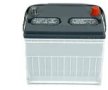 CHECK YOUR BATTERY WATER LEVEL OFTEN. CHECK YOUR BATTERY WATER LEVEL OFTEN.
WE RECOMMEND AT MINIMUM, EVERY 2 WEEKS.
KEEPING THE WATER AT THE CORRECT LEVEL,
WILL GREATLY INCREASE THE LIFE OF YOUR BATTERIES.
OTHER TIPS ON EXTENDING YOUR BATTERIES LIFE:
Recharge a deep cycle battery as soon as possible after each use. When not in use, maintaining the battery's State-of-Charge at 100%. Continuous float charging is the best way to prevent permanent lead sulfation. If continuous float charging is not possible, recharge before the State-of-Charge drops below 80%. Permanent sulfation kills approximately 85% of all deep cycle batteries.
Never discharge below 10.5 volts. A low voltage disconnects set for approximately 12.0 VDC or more can limit the maximum Depth-of-Charge and protect electrical appliances.
Provide ventilation. High ambient temperatures above 80° will shorten battery life because it increases positive grid corrosion and growth.
In the warmer climates and during the summer, "watering" is required more often. Check the electrolyte levels and add only distilled water or, in a emergency, rain water. The plates must be covered at all times, do not overfill, and keep the top of the battery clean. Never add electrolyte (battery acid) to a battery.
Recharging slowly with the manufacturer's recommended voltages and current.
Keep your battery well maintained.
Avoid shallow (below 10%) discharges because lead dioxide builds up on the positive plates.
Maintaining the State-of-Charge over 80% (preferably 100%) and electrolyte levels; tightening loose hold-down clamps and cable connections; removing corrosion and periodic equalizing; if required, is normally the only preventive maintenance required for a deep cycle battery.
YEARLY SERVICES NEEDED
- REFRIGERATOR: Clean burner assembly and orifice clean out chimney. Check for LP leaks and test heater element.
- FURNACE: Remove furnace, clean burner assembly, orifice clean blower assembly and sail switch. LP leak test and test burn unit. Reinstall furnace.
- WATER HEATER: Clean mixer tube and orifice, clean heat exchanger and chimney. LP leak test and test burn unit.
- L.P. REGULATOR: Perform LP Pressure lock-out test and leak down test.
- INVERTER: Remove inverter, clean thermal fan and heat sink plates, test operation of input and output. Reinstall inverter.
- ROOF A/Cs: Clean
- AQUA HOT: Webasto or hurricane should be serviced once a year.
- Inspect exterior seals – roof, windows, moldings.
|